
Managing money in your small business can feel overwhelming, especially when you're unsure if you'll have enough cash to cover next month's bills. Many UK small business owners confuse profit with available cash, leading to unexpected shortages despite healthy sales. Cash flow forecasting is essential for effective financial management and planning in businesses. This guide explains practical cash flow forecasting techniques specifically for small businesses and self-employed individuals across the UK, helping you gain control over your finances and make confident decisions.
Table of Contents
- Key takeaways
- What is cash flow forecasting and why does it matter to your business?
- How to create a simple cash flow forecast for your small business
- Common challenges and how to improve cash flow forecasts
- Using cash flow forecasts to make smarter business decisions
- How LS25 Accountants can help with your cash flow forecasts
- Frequently asked questions
Key Takeaways
| Point | Details |
|---|---|
| Cash flow forecasting purpose | It predicts when money will enter and leave the business to prevent shortfalls. |
| Forecast updates improve decisions | Updating forecasts as circumstances change improves responsiveness and decision making. |
| Track key inputs | Accurate forecasts rely on tracking sales, expenses and payment schedules. |
| Simple forecasting tools | Even basic templates and tools guide beginners toward a reliable monthly forecast. |
What is cash flow forecasting and why does it matter to your business?
Cash flow forecasting projects when money will enter and leave your business over a specific period, typically monthly or quarterly. Unlike profit and loss statements that show accounting income, forecasts track actual cash movements. You might record a £5,000 sale in January, but if the customer pays in March, your January cash flow doesn't benefit. This timing difference causes many small businesses to struggle despite appearing profitable on paper.
The benefits of accurate forecasting extend beyond avoiding nasty surprises:
- Prevents cash crunches by identifying shortfalls weeks in advance
- Enables strategic planning for investments, equipment purchases, or hiring
- Ensures you can pay suppliers, staff, and HMRC on time
- Provides evidence of financial control when seeking loans or investment
- Reduces stress by replacing uncertainty with visibility
Many business owners mistakenly believe cash flow problems only affect unprofitable companies. In reality, rapidly growing businesses often face the worst cash squeezes. When you win a large contract, you might need to buy materials, pay staff, and cover expenses months before the client pays you. This growth paradox catches countless businesses off guard.
"Cash flow is the lifeblood of any business. Without it, even profitable companies can fail."
Another common confusion involves treating cash flow as a static snapshot rather than a dynamic projection. Your forecast should evolve as circumstances change. A customer delays payment? Update your forecast immediately. Landed an unexpected sale? Adjust your projections.
Pro Tip: Start with a basic monthly forecast covering just three months ahead. Master this simple approach before attempting complex quarterly or annual projections. You'll build confidence and accuracy through regular practice.
Understanding why you need cash flow forecasts transforms how you manage your business finances. Instead of reacting to problems, you anticipate them. Instead of hoping you'll have enough money, you know exactly where you stand.
How to create a simple cash flow forecast for your small business
Building your first cash flow forecast requires gathering specific financial information and organising it systematically. Tracking sales, expenses, and payment schedules improves forecasting accuracy and helps you spot patterns in your business finances.
Start by collecting these essential data points:
- Current bank balance (your opening cash position)
- Expected sales with realistic payment dates (not invoice dates)
- Regular fixed costs like rent, insurance, and loan repayments
- Variable expenses including stock purchases, utilities, and marketing
- Upcoming VAT payments and corporation tax deadlines
- Seasonal patterns affecting your income or costs
Follow this step-by-step process to build your forecast:
- Record your opening cash balance from your bank account
- List all expected cash inflows with specific dates (be conservative with estimates)
- Document all planned cash outflows including regular bills and one-off expenses
- Calculate net cash flow by subtracting total outflows from total inflows
- Add net cash flow to opening balance to determine your closing balance
- Use this closing balance as next period's opening balance
Here's a simple example showing one month's forecast:
| Item | Week 1 | Week 2 | Week 3 | Week 4 | Monthly total |
|---|---|---|---|---|---|
| Opening balance | £5,000 | £4,200 | £5,800 | £4,300 | £5,000 |
| Cash inflows | £2,000 | £3,500 | £1,500 | £4,000 | £11,000 |
| Cash outflows | £2,800 | £1,900 | £3,000 | £2,200 | £9,900 |
| Net cash flow | -£800 | £1,600 | -£1,500 | £1,800 | £1,100 |
| Closing balance | £4,200 | £5,800 | £4,300 | £6,100 | £6,100 |
This example reveals potential tight spots in weeks 1 and 3, even though the month ends positively. Without weekly visibility, you might miss these pressure points and face payment difficulties.
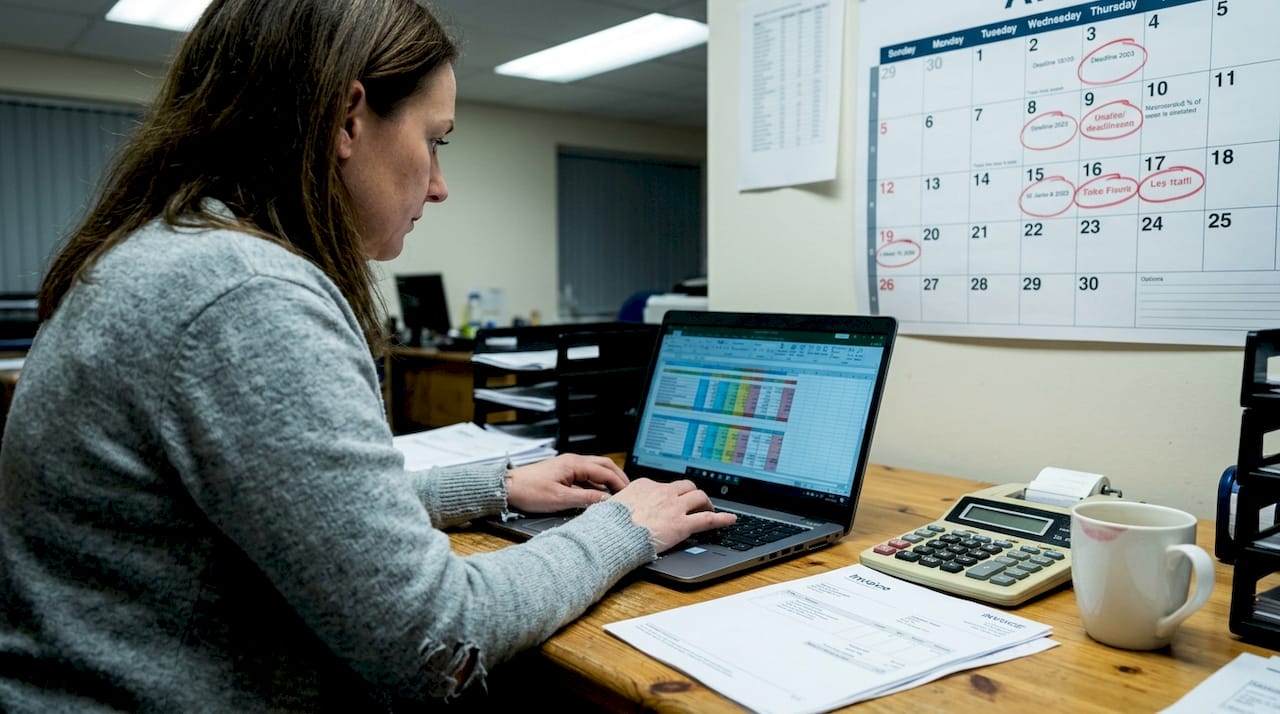
Remember to factor in VAT carefully. If you're VAT registered, the cash you collect includes VAT that belongs to HMRC. Your £12,000 invoice might only represent £10,000 of usable cash after VAT. Many small businesses forget this distinction and overspend.
Timing delays deserve special attention. UK payment terms often stretch to 30 or even 60 days. If you invoice on the 1st with 30-day terms, expect payment around the 5th of the next month (allowing for processing time). Build these realistic delays into your forecast rather than assuming immediate payment.
Pro Tip: Review and update your forecast weekly during the first three months. This frequent revision helps you understand your business rhythms and catch errors quickly. As accuracy improves, you can reduce updates to fortnightly or monthly.
For additional guidance on managing cash effectively, explore how to manage cash flow in your business to complement your forecasting efforts.
Common challenges and how to improve cash flow forecasts
Even well-intentioned forecasts face accuracy challenges that can undermine their usefulness. Understanding typical problems helps you avoid them and build more reliable projections.
Small businesses commonly struggle with:
- Unpredictable sales volumes making income estimates unreliable
- Late customer payments disrupting carefully planned cash inflows
- Incomplete expense tracking leading to surprise costs
- Seasonal fluctuations that catch inexperienced forecasters off guard
- Optimism bias causing overestimation of income and underestimation of costs
Choosing the right forecasting method affects both accuracy and effort required:
| Method | Advantages | Disadvantages | Best for |
|---|---|---|---|
| Manual spreadsheets | Free, flexible, full control | Time-consuming, error-prone, no automation | Very small businesses, beginners |
| Cloud accounting software | Automated data entry, bank feeds, real-time updates | Monthly cost, learning curve | Growing businesses ready to invest |
| Specialised forecasting tools | Advanced scenarios, detailed analytics | Higher cost, complexity | Established businesses with complex needs |
Implementing these best practices dramatically improves forecast reliability:
- Update actual figures weekly to compare against predictions and learn from variances
- Use conservative estimates for income (reduce expected amounts by 10-20%)
- Add contingency buffers for expenses (increase expected costs by 10-15%)
- Create multiple scenarios (best case, realistic, worst case) to prepare for uncertainty
- Document assumptions behind each forecast figure for future reference
- Separate confirmed income from potential sales to avoid false confidence
Pro Tip: Involve an accountant or financial advisor to review your forecasts quarterly. Their experience spotting unrealistic assumptions and missing elements can prevent costly mistakes. Small business accounting tips and recommended practices for accountants enhance the quality and reliability of cash flow forecasts, potentially reducing forecasting errors by 30%.
Scenario planning deserves special emphasis. Rather than creating one forecast and treating it as gospel, develop three versions. Your realistic scenario uses your best estimates. The optimistic version assumes things go slightly better than expected. The pessimistic scenario plans for reasonable setbacks like a major customer delaying payment or unexpected equipment repairs.
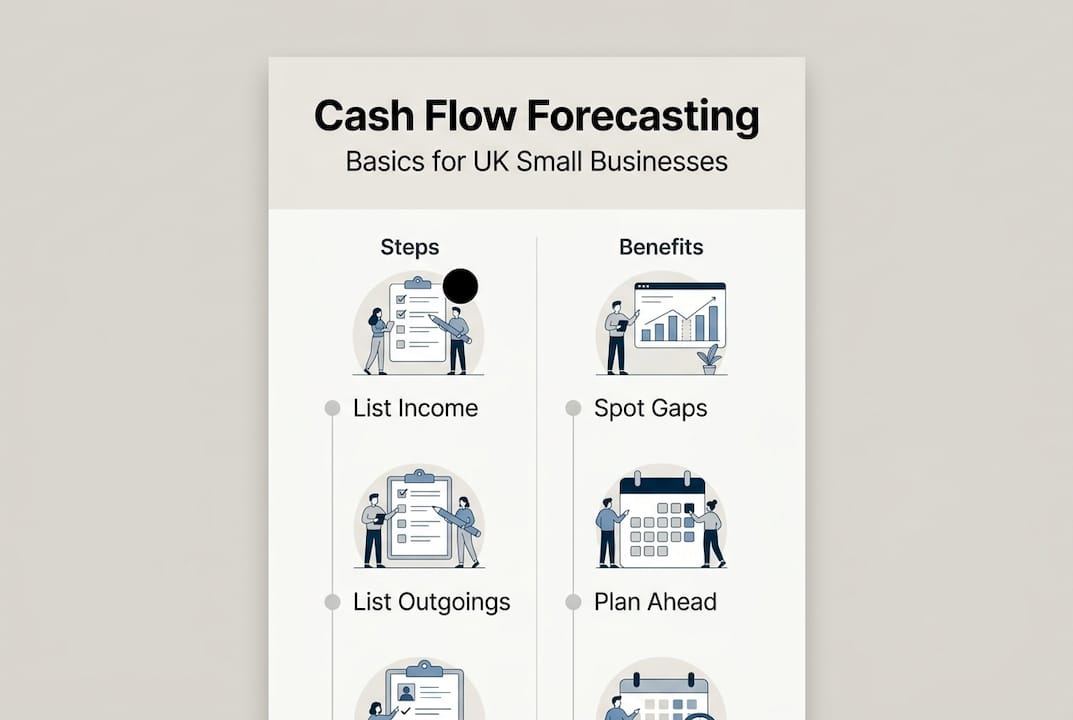
This three-scenario approach prevents two dangerous extremes. You avoid the paralysis that comes from excessive pessimism whilst also escaping the complacency that follows unrealistic optimism. When actual results fall between your scenarios, you've successfully captured the likely range of outcomes.
Common forecasting errors often stem from overlooking irregular expenses. Annual insurance premiums, quarterly VAT bills, and periodic equipment maintenance create lumpy expense patterns. Spreading these costs mentally across months feels natural but distorts your forecast. Record them in the specific months when cash actually leaves your account.
Using cash flow forecasts to make smarter business decisions
Creating forecasts delivers little value unless you actively use them to guide business choices. The real power emerges when forecasts inform daily operations and strategic planning.
Cash flow forecasting helps prevent liquidity issues by anticipating shortages or surpluses, enabling you to act proactively rather than reactively. Here's how to leverage forecasts effectively:
- Delay discretionary expenses when forecasts show upcoming tight periods
- Accelerate invoice collection by offering early payment discounts during cash crunches
- Schedule major purchases during predicted surplus months
- Negotiate extended payment terms with suppliers before cash becomes tight
- Time marketing campaigns to boost sales during forecasted slow periods
Tax planning becomes significantly easier with accurate forecasts. UK businesses face multiple tax obligations throughout the year, including VAT returns, corporation tax payments, and PAYE for employees. Missing these deadlines triggers penalties and interest charges that strain already tight cash positions.
Your forecast should explicitly include every tax payment with its due date. For VAT-registered businesses, this means marking quarterly or monthly VAT deadlines. Corporation tax typically falls nine months after your accounting year end. By building these obligations into your forecast, you ensure funds remain available when HMRC expects payment.
Seasonal businesses benefit enormously from forecasting. If you run a landscaping company, summer brings abundant work whilst winter slows dramatically. Your forecast helps you save surplus summer cash to cover winter's leaner months. Without this visibility, the temptation to spend freely during good months leaves you vulnerable when work dries up.
"Forecasting transforms financial management from reactive scrambling to proactive planning. You control your business rather than letting circumstances control you."
Banks and investors increasingly expect to see cash flow forecasts when considering lending or investment. A well-prepared forecast demonstrates financial competence and realistic planning. It shows you understand your business's financial rhythms and have thought seriously about future challenges. This professional approach significantly improves your chances of securing funding on favourable terms.
Testing major decisions through forecast scenarios prevents expensive mistakes. Considering hiring your first employee? Model the additional salary, National Insurance contributions, and pension costs in your forecast. Can you maintain positive cash flow? If the forecast shows problems, perhaps you need to delay hiring or boost sales first.
Similarly, equipment purchases deserve forecast scrutiny. That £15,000 van might seem affordable today, but does your forecast show sufficient cash to cover it without jeopardising next month's supplier payments? Running the numbers before committing prevents situations where you own new equipment but can't afford to operate your business.
Remember to revisit forecasts after implementing major decisions. If you hired that employee or bought the equipment, update your forecast immediately with the actual costs and revised expectations. This discipline ensures your forecast remains accurate and useful rather than becoming an outdated document gathering digital dust.
For comprehensive guidance on managing tax obligations alongside cash flow, explore tax planning for small businesses to integrate these crucial elements of financial management.
How LS25 Accountants can help with your cash flow forecasts
Whilst this guide equips you with fundamental forecasting knowledge, professional support accelerates your progress and prevents costly errors. LS25 Accountants specialises in helping small businesses across the LS25 area build robust financial foundations through expert cash flow management and planning.
Our team provides personalised support to create and refine cash flow forecasts tailored to your specific business model and industry. We help you identify blind spots, validate assumptions, and develop realistic projections that actually guide decision making. Beyond forecasting, we offer comprehensive accounting services including VAT returns, tax planning, and bookkeeping that integrate seamlessly with your cash flow management.
Many clients discover that professional forecast reviews reduce financial stress significantly. Instead of worrying whether you've missed something crucial, you gain confidence knowing an experienced accountant has verified your numbers and planning. This peace of mind lets you focus energy on growing your business rather than constantly fretting about cash.
Pro Tip: Schedule quarterly forecast reviews with LS25 Accountants to maintain accuracy as your business evolves. Regular professional input catches emerging problems early and helps you capitalise on opportunities you might otherwise miss.
Frequently asked questions
What is the difference between cash flow and profit?
Cash flow tracks actual money moving in and out of your bank account, whilst profit represents accounting income after deducting expenses. A business can show strong profits on paper but still face severe cash flow problems if customers delay payments or you must pay suppliers before receiving customer money. Profit ignores timing, but cash flow depends entirely on when money actually changes hands.
How often should I update my cash flow forecast?
Update frequency depends on your business size and financial volatility, but weekly or monthly updates work best for most small businesses. Weekly reviews suit businesses with rapid changes, tight margins, or seasonal fluctuations. Monthly updates suffice for stable businesses with predictable income and expenses. Regular updates help capture payment delays, unexpected costs, and sales changes before they create problems.
What are the best tools for cash flow forecasting?
Small businesses typically start with simple spreadsheets using Excel or Google Sheets, which cost nothing and offer complete flexibility. As complexity grows, cloud accounting software like Xero, QuickBooks, or FreeAgent provides automated bank feeds and real-time updates for £10-30 monthly. Tool choice depends on your comfort with technology, business complexity, and budget. Many successful businesses forecast effectively using nothing more sophisticated than a well-organised spreadsheet.
Can cash flow forecasting help with tax planning?
Cash flow forecasting is crucial for managing tax payments and planning effectively by ensuring funds remain available when VAT, corporation tax, or PAYE payments fall due. Forecasts let you set aside money gradually rather than scrambling when deadlines arrive. Integrating tax obligations into your forecast prevents the common mistake of spending money that legally belongs to HMRC. This integration improves overall financial stability and eliminates penalty risks from missed tax planning deadlines for small businesses.