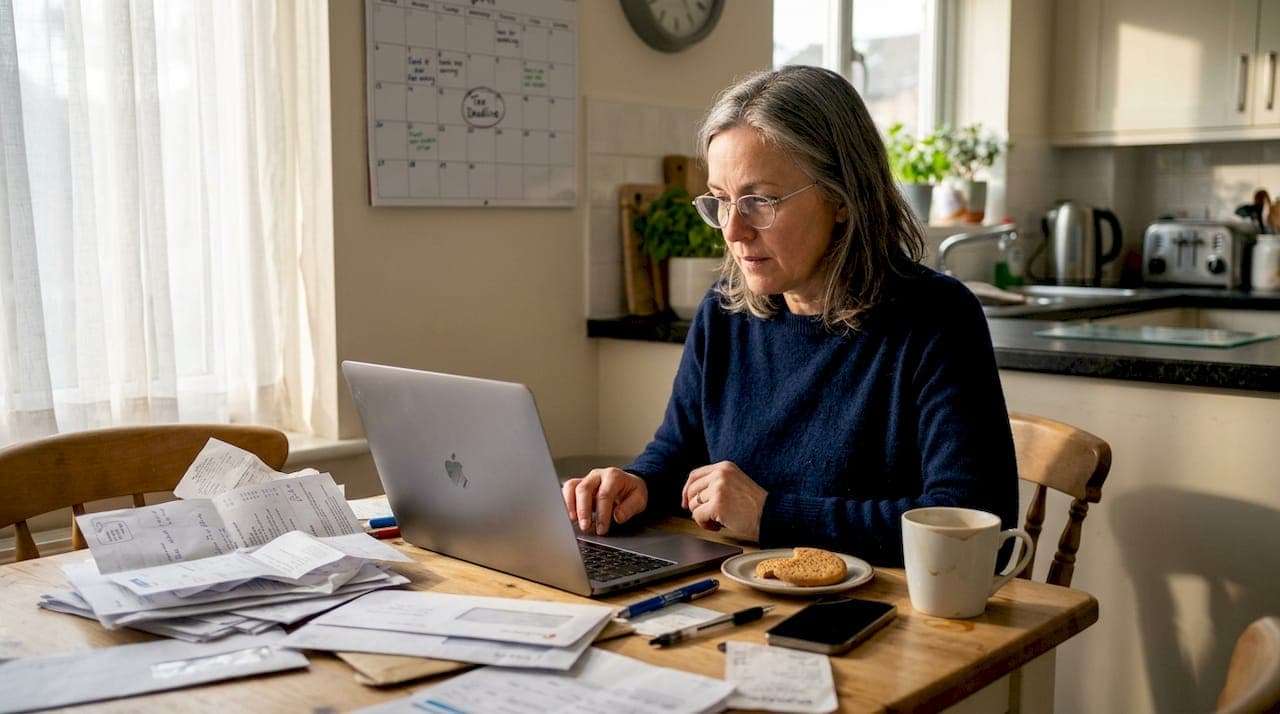
Over 40% of self-employed individuals underclaim expenses each year, quietly losing thousands in legitimate tax savings. If you run a small business or work for yourself, the difference between knowing your allowable deductions and guessing at them can be hundreds, sometimes thousands, of pounds annually. This article walks you through the main categories of claimable expenses, how to choose between simplified and actual cost methods, what capital allowances mean for bigger purchases, and the common mistakes that trigger HMRC scrutiny. By the end, you will have a clear, practical framework for making every legitimate claim count.
Table of Contents
- Understanding allowable expenses: the key criteria
- Main types of tax deductions for small businesses
- Simplified expenses versus actual costs: which should you choose?
- Capital allowances and one-off investments
- What you cannot claim: common mistakes and penalties
- How to optimise your tax deductions every year
- Get expert support and maximise your tax savings
- Frequently asked questions
Key Takeaways
| Point | Details |
|---|---|
| Know the HMRC rules | Claim only expenses that are solely for business use and always keep evidence. |
| Choose the best method | Compare simplified versus actual costs each year to maximise your deduction. |
| Avoid common errors | Personal claims, entertainment, and poor record-keeping often trigger penalties. |
| Plan for capital purchases | Large equipment must be claimed using capital allowances, not as normal expenses. |
| Prepare for digital compliance | Making Tax Digital from 2026 means accurate digital records are now crucial. |
Understanding allowable expenses: the key criteria
Before you claim anything, you need to understand HMRC's core test. An expense is only deductible if it is "wholly and exclusively" for business purposes. That single phrase rules out a huge number of costs that feel business-related but are partly personal.
The tricky part is mixed-use spending. Your mobile phone, home broadband, or a car used for both work and personal trips all fall into a grey area. HMRC allows you to claim the business proportion, but you must be able to justify that split with evidence. A usage log, call records, or mileage diary are not optional extras; they are your defence if HMRC ever asks questions.
Understanding tax allowable expenses properly from the start saves you from two equally costly errors:
- Overclaiming: Inflating deductions or including personal costs invites penalties and investigations.
- Underclaiming: Being overly cautious means you pay more tax than you legally owe.
"The 'wholly and exclusively' rule is not just a guideline. It is the legal standard HMRC applies when reviewing every expense on your return."
Keep receipts, invoices, and usage records for every claim. Digital records are increasingly the norm, and they make retrieval far simpler when deadlines loom.
Main types of tax deductions for small businesses
With those principles in mind, here are the main categories you will encounter and probably need to claim as a UK business owner. The main categories span office costs, premises, travel, staff, stock, marketing, professional fees, and financial costs.
- Office costs: Stationery, postage, printer ink, and software subscriptions used solely for work.
- Premises: Rent, business rates, energy bills, and insurance for your workspace. If you work from home, you can claim a proportion of household costs.
- Travel: Business mileage, train fares, parking, and accommodation for overnight trips. Commuting from home to a regular workplace does not count.
- Staff and subcontractors: PAYE wages, employer National Insurance contributions, and payments to freelancers for genuine business work.
- Stock and materials: Raw goods, components, and finished items bought for resale.
- Marketing: Advertising spend, website hosting, domain fees, and printed business cards.
- Professional fees: Accountancy, legal advice, and business insurance premiums.
- Financial costs: Bank charges, merchant fees, and interest on business loans.
Pro Tip: Review this list at the end of each quarter, not just at year end. Costs you forgot to log in January are much harder to reconstruct in the following January.
For a more detailed breakdown of each category, the deduction guide on the LS25 Accountants blog covers eligibility rules and worked examples.
Simplified expenses versus actual costs: which should you choose?
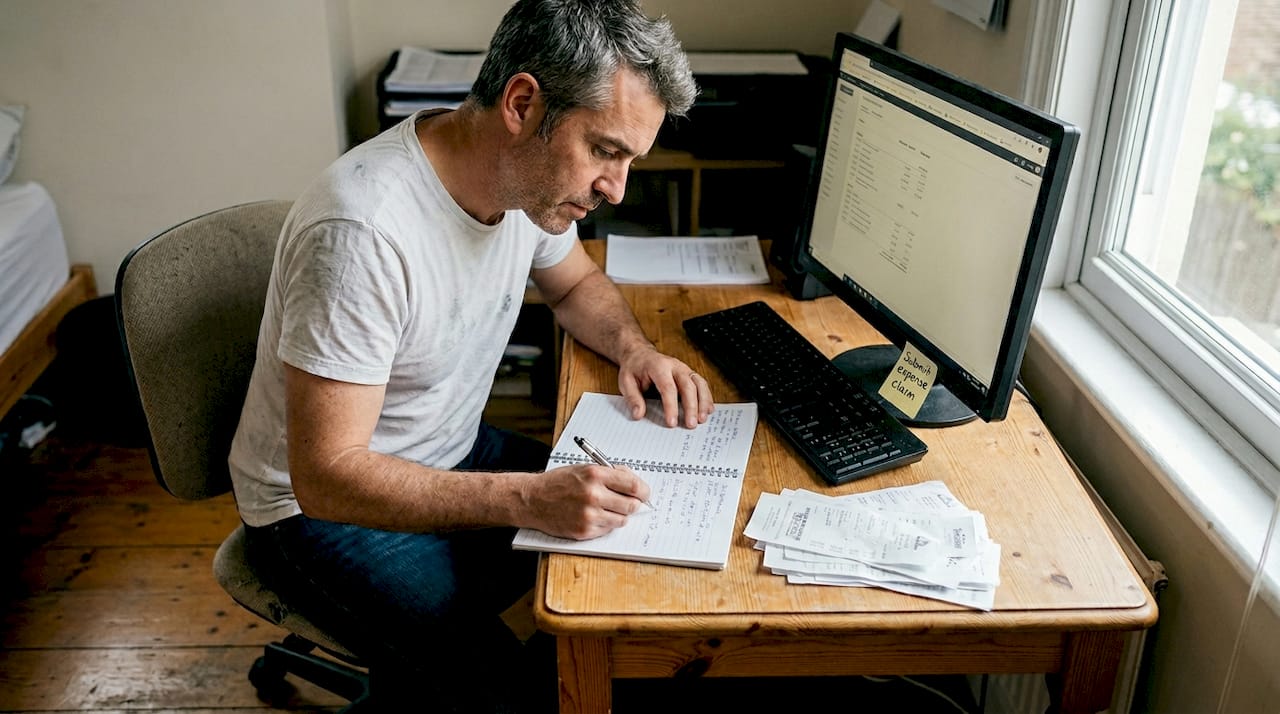
For core running costs like home working or business mileage, you have a choice: simplified flat rates or actual costs. Each has its advantages, and picking the wrong one can mean leaving money on the table.
| Expense type | Simplified rate (2025/26) | Actual cost method |
|---|---|---|
| Home working (25-50 hrs/month) | £10/month | Proportion of bills, mortgage interest, council tax |
| Home working (51-100 hrs/month) | £18/month | As above |
| Home working (101+ hrs/month) | £26/month | As above |
| Car mileage (first 10,000 miles) | 45p per mile | Actual fuel, insurance, servicing, depreciation |
| Car mileage (over 10,000 miles) | 25p per mile | As above |
The simplified method is quick and requires minimal paperwork. It suits people who work from home occasionally or drive a modest number of business miles. The actual cost method takes more effort but often produces a larger deduction for high-mileage drivers or those with significant home office costs.
- You cannot mix methods for the same category within a single tax year.
- Once you choose actual costs for a vehicle, you must stick with it for that vehicle.
- Simplified rates are fixed by HMRC and do not change with your actual spending.
"Choosing the wrong method for your situation is one of the most common ways self-employed people quietly overpay tax year after year."
Pro Tip: Run both calculations before you file. It takes 20 minutes and could reveal a meaningful difference. The business expenses guide includes a worked example comparing both approaches for a typical home-based consultant.
Capital allowances and one-off investments
Beyond day-to-day costs, bigger purchases like new equipment are treated differently, and knowing this can prevent costly mistakes. You cannot simply deduct the full cost of a laptop, van, or piece of machinery as a regular expense. Instead, you claim capital allowances.
The Annual Investment Allowance (AIA) lets you deduct up to £1 million in the first year for plant, machinery, and business vehicles. For most small businesses, this means you can write off qualifying equipment purchases in full in the year you buy them.
| Asset type | Allowance available | Notes |
|---|---|---|
| Plant and machinery | AIA up to £1M | Includes computers, tools, office furniture |
| Business vehicles | AIA or writing-down allowance | Cars have separate rules based on CO2 emissions |
| Pre-trading expenses | Allowable up to 7 years prior | Must be wholly for the business |
Here is how to approach claiming capital items correctly:
- Identify whether the item qualifies as plant, machinery, or a vehicle.
- Check whether it is used exclusively for business or partly personally.
- Calculate the business-use proportion if mixed.
- Claim via AIA on your Self Assessment return for the year of purchase.
- Keep the purchase invoice and any usage evidence on file.
Pre-trading expenses are worth noting. If you spent money on equipment or training before you officially started trading, you can still claim those costs, provided they were incurred within the seven years before your business began. Use the tax planning checklist to make sure you have not missed any qualifying pre-launch costs.
What you cannot claim: common mistakes and penalties
Many deductions seem obvious, but some often-learned lessons come from HMRC saying no. Here is what not to include on your return.
Non-allowable expenses include personal clothing, client entertainment, loan repayments, penalties, owner drawings, and standard commuting costs. These are the most frequently misunderstood categories.
- Clothing: Your everyday work clothes, even if you only wear them for work, are not deductible. Uniforms with a company logo or protective gear are a different matter.
- Client entertainment: Taking a client to dinner or a sporting event is not allowable, regardless of how business-focused the conversation was.
- Loan repayments: The capital portion of a loan repayment is not deductible. Only the interest element may qualify.
- Penalties and fines: HMRC penalties, parking fines, and similar charges cannot be claimed.
- Drawings: Money you take out of the business as personal income is not an expense.
- Commuting: Travel from your home to your regular place of work is personal, not business.
"HMRC can open an enquiry up to four years after a return is filed for innocent errors, and up to 20 years for deliberate inaccuracies. The cost of getting it wrong is not just financial."
The safest habit is to keep a completely separate business bank account. When personal and business money mix, it becomes very difficult to justify any borderline claim. For context on where your deductions sit relative to your overall liability, the UK tax thresholds guide explains how income bands interact with your net profit figure.
How to optimise your tax deductions every year
To finish, here are the most effective steps for maximising your business deductions and minimising tax headaches.
- Compare methods annually. Run simplified versus actual calculations for home working and mileage before you file. Rates and your usage patterns change, so last year's best option may not be this year's.
- Use a dedicated business account. Every transaction is automatically separated, making expense tracking far simpler and audit-ready.
- Log mileage in real time. A mileage app takes seconds per journey and builds an unassailable record over the year.
- Digitise receipts immediately. A photo taken on the day beats a faded paper receipt found in a drawer six months later.
- Review your category list quarterly. New subscriptions, equipment, or subcontractors may have appeared since your last review.
- Prepare for Making Tax Digital. MTD for £50k+ turnover comes into effect from April 2026, requiring digital record-keeping for most self-employed individuals. Starting now avoids a last-minute scramble.
Pro Tip: The 40% underclaim rate among self-employed people is not because they are dishonest. It is because they are busy. Automating your record-keeping removes the friction that causes legitimate claims to slip through.
If you are unsure whether a specific cost qualifies, the why hire a tax advisor article explains how professional advice typically pays for itself. For broader financial management, the accounting tips guide covers payroll, VAT, and tax in one place.
Get expert support and maximise your tax savings
Understanding the rules is one thing. Applying them correctly to your specific business, year after year, is where real savings are made. If you want to reclaim more of your profits, safeguard against errors, or simply make this year's tax return straightforward, LS25 Accountants offers practical, jargon-free support tailored to small businesses and self-employed individuals across the LS25 area.
From reviewing your current claims to preparing you for Making Tax Digital compliance in 2026, the team brings hands-on expertise to every client. The detailed guide to tax deductions is a strong starting point if you want to go deeper before booking a consultation. Whether you need a one-off review or ongoing support, getting the right advice now means fewer surprises when the deadline arrives.
Frequently asked questions
Can I claim a laptop as a tax deduction if I use it personally too?
You can claim the business-use proportion only, supported by usage evidence. If the laptop cost over £500, capital allowances apply rather than a direct expense deduction.
Is HMRC's mileage allowance still 45p per mile in 2026?
Yes. For 2025/26, the approved mileage rate remains 45p for the first 10,000 business miles, dropping to 25p per mile thereafter.
How long must I keep tax deduction records in the UK?
You must keep expense records for at least five years after the 31 January submission deadline for the relevant tax year.
Are clothing or meals claimable as business expenses?
Standard clothing and everyday meals are not allowable. Exceptions include protective gear or uniforms with a company logo, and meals during genuine overnight business travel.
What happens if I claim a non-allowable expense?
HMRC may reject the claim, apply financial penalties, or open a formal enquiry, particularly where errors are repeated or involve significant sums.