
Many small business owners in the LS25 area often feel overwhelmed when money leaves their account faster than it arrives. Tackling cash flow issues matters because inconsistent income and unexpected expenses can threaten your business stability. By learning to assess income and expenditure using a cash flow statement, you'll gain clarity about your current finances and discover simple ways to take control, prepare for lean periods, and boost your confidence in managing cash each month.
Table of Contents
- Step 1: Assess Current Income and Expenditure
- Step 2: Implement Reliable Cash Flow Tracking Tools
- Step 3: Forecast Future Cash Flow Requirements
- Step 4: Optimise Payment and Collection Processes
- Step 5: Review Results and Adjust Strategies
Quick Summary
| Key Point | Explanation |
|---|---|
| 1. Assess Income and Expenditure | Understand cash flow by tracking all income and expenses over the last 12 months. This defines your financial planning foundation. |
| 2. Implement Cash Flow Tracking Tools | Use accounting software like Xero or FreshBooks to automatically track cash inflows and outflows, reducing manual errors and saving time. |
| 3. Forecast Future Cash Flow | Create a 12-month cash flow forecast based on historical data to identify potential shortfalls and seasonal patterns for better financial planning. |
| 4. Streamline Payment Processes | Tighten invoicing timelines and offer multiple payment methods to encourage faster payments, improving your working capital speedily. |
| 5. Regularly Review and Adjust Strategies | Schedule monthly reviews to compare actual cash flow against forecasts, allowing for timely adjustments and better financial control. |
Step 1: Assess Current Income and Expenditure
Before you can improve your cash flow, you need to understand where your money comes in and where it goes out. This assessment forms the foundation of your financial planning and reveals patterns you might otherwise miss.
Start by gathering your financial records from the last 12 months. Pull together your bank statements, invoices, expense receipts, and any income documentation. If you're self-employed or running a sole trade, this might feel overwhelming, but you're looking for clarity, not perfection.
Understanding how to read a cash flow statement helps you see the bigger picture. A cash flow statement breaks your money movements into three categories:
Here's a summary of the three main cash flow categories and their typical business impacts:
| Category | Typical Transactions | Business Impact |
|---|---|---|
| Operating Activities | Sales, routine expenses, payments | Directly affects daily liquidity |
| Investing Activities | Asset purchases, equipment upgrades | Influences long-term value |
| Financing Activities | Loans, repayments, owner investment | Alters debt and capital levels |
- Operating activities: Sales revenue, invoice payments from clients, and day-to-day business expenses
- Investing activities: Equipment purchases, property upgrades, or asset sales
- Financing activities: Loans you've taken out, repayments, or personal investments into the business
Create a simple spreadsheet or use accounting software to list your monthly income sources. Include client payments, service fees, product sales, and any other revenue streams. Be honest about what actually comes in, not what you hope will arrive.
Next, document your expenditures. Track everything: rent or mortgage, utilities, staff wages (if applicable), supplier costs, insurance, professional fees, and even those smaller expenses that add up. Most small business owners in the LS25 area underestimate their spending by roughly 20 percent because they overlook regular smaller payments.
Knowing exactly what comes in and goes out each month is your first line of defence against cash flow crises.
Once you've listed income and expenses, calculate your monthly net cash flow by subtracting total expenses from total income. If the number is positive, money is accumulating. If it's negative, you're spending more than you earn in some months.
Look for seasonal patterns. Many service-based businesses in this region experience quiet periods and busy periods. Your building contractor might earn more in summer. Your accountancy services might see higher revenue in January and April. Understanding these rhythms helps you prepare.
Pro tip: Review your records quarterly rather than waiting until tax time. This keeps you accountable and lets you spot spending trends before they become serious problems.
Step 2: Implement Reliable Cash Flow Tracking Tools
You've assessed your income and expenditure. Now you need systems that track these movements automatically so you're not manually chasing figures every month. The right tools transform cash flow management from a burden into a manageable routine.
Start by choosing a tracking method that suits your business size and complexity. For many sole traders in the LS25 area, this means moving beyond spreadsheets into dedicated accounting software. Tools like Xero, FreshBooks, or Wave offer free or low-cost options designed specifically for small businesses.
Comparing popular cash flow tracking methods for small businesses:
| Method | Ease of Use | Automation Potential | Cost Range |
|---|---|---|---|
| Spreadsheets | Manual entry needed | Low (manual updates) | Usually free |
| Xero | User-friendly design | High (bank integration) | £10–£24/month |
| FreshBooks | Simple for invoicing | Moderate automation | £13–£41/month |
| Wave | Easy for starters | Moderate (some feeds) | Free or low cost |
Your tracking system should record two things continuously. First, capture all cash inflows such as client invoices paid, service fees received, and any other income entering your account. Second, log all cash outflows including supplier payments, staff wages, rent, utilities, and equipment purchases.
Payments efficiency initiatives emphasise the value of electronic invoicing and standardised payment messaging. These modern approaches reduce errors, lower processing costs, and give you real-time visibility into your cash position. When invoices and payments move electronically, you get clearer data faster.
Set a frequency for your tracking updates. Weekly entries work well for businesses with frequent transactions. Monthly reviews suit those with fewer, larger payments. The consistency matters more than the frequency.
Your tracking system should produce monthly reports showing:
- Total cash in versus cash out
- Remaining balance at month end
- Trends across the year
- Any problem periods emerging
A tracking tool you actually use beats sophisticated software gathering dust on your shelf.
Integrate your tracking with your bank account if the software allows. This automation catches transactions you might otherwise miss and keeps your records current without manual entry.
Start small and build complexity. Many business owners feel overwhelmed by fancy reporting features they don't need. Focus first on accurate daily recording, then layer in forecasting and analysis once you're comfortable.
Pro tip: Automate your bank feeds so transactions flow directly into your accounting software, then spend five minutes weekly reviewing entries for accuracy rather than hours monthly trying to reconcile everything at once.
Step 3: Forecast Future Cash Flow Requirements
You know what happened last month. Now you need to predict what's coming so you're never caught off guard by unexpected shortfalls. Forecasting transforms you from reactive to proactive.

Start by looking at your historical data from the past 12 to 24 months. Identify patterns in your income and expenses. When do clients typically pay invoices? Which months see higher seasonal demand? What expenses are fixed versus variable?
Create a 12-month forecast using your tracking data and realistic assumptions. Project your monthly income based on existing contracts, repeat clients, and market conditions. Don't inflate figures hoping for the best. Conservative estimates protect you better.
For expenses, separate fixed costs from variable costs. Fixed costs like rent and insurance stay the same monthly. Variable costs like supplies fluctuate with your business activity. This distinction helps you understand which expenses you can adjust if cash becomes tight.
Using financial projections templates allows you to model different scenarios. Create three versions: a realistic forecast, an optimistic scenario, and a pessimistic one. This approach shows you best case, worst case, and most likely outcomes.
List the key assumptions driving your forecast:
- Expected sales growth or decline percentage
- Seasonal variation patterns
- Planned expense increases or reductions
- Any major purchases planned
- Anticipated changes in client payments timing
Calculate your projected cash position for each month by taking opening balance, adding income, subtracting expenses, and noting your closing balance. This shows you when you might face a cash shortage.
A forecast you update quarterly stays relevant. One you write once and ignore becomes useless.
Identify months where cash runs low. If September typically shows a dip, you know now to arrange a business overdraft facility or build reserves beforehand. Planning ahead prevents panic.
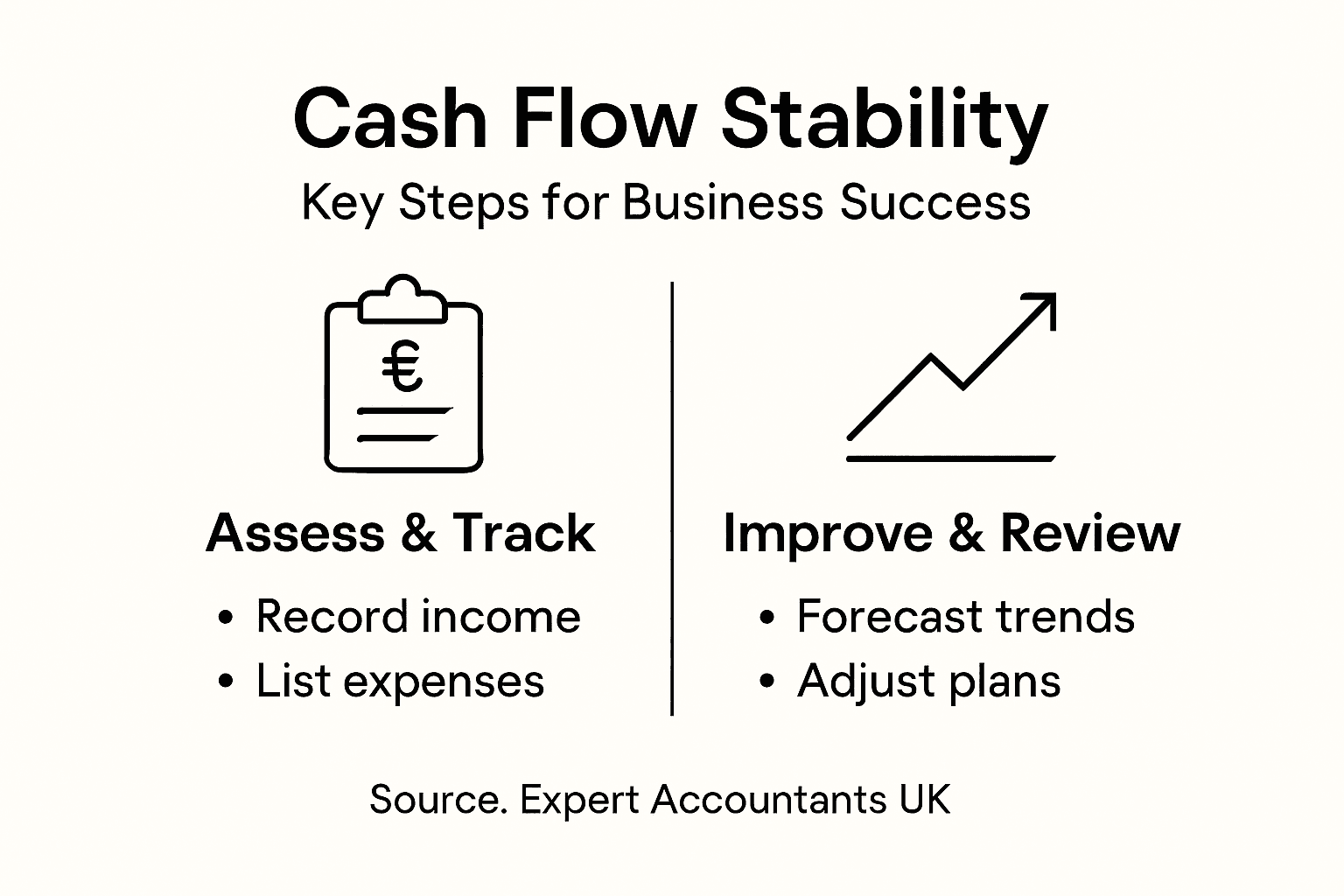
Review your forecast with an accountant if possible. They spot assumptions you've missed and help stress test your numbers against industry standards.
Pro tip: Update your forecast every quarter with actual results, then adjust next year's projections accordingly. This trains your forecasting accuracy and catches emerging trends early.
Step 4: Optimise Payment and Collection Processes
Fast payments mean faster cash. Slow collection processes drain your working capital and force you to cover costs from your own pocket. Streamlining how you send invoices and collect money directly improves your cash flow.
Start by tightening your invoicing timeline. Send invoices on the day you deliver goods or complete services, not weeks later. The sooner an invoice reaches your client, the sooner payment can arrive. Include clear payment terms stating when you expect payment, typically 14 to 30 days for small business transactions.
Make payment easy for your clients. Offer multiple payment methods including bank transfer, card payments, and online platforms. The fewer barriers between your invoice and their payment, the faster money flows to you.
Electronic invoicing and standardised payment systems reduce errors and speed up processing. When invoices and payments move digitally rather than on paper, both you and your clients save time and reduce mistakes that delay payments.
Implement a follow-up system for unpaid invoices. Set reminders at 7 days past due, then 14 days, then 21 days. A polite email reminder often prompts immediate payment from clients who simply forgot. Don't let invoices drift into the forgotten category.
For collection processes, establish clear procedures:
- Record every payment received immediately
- Reconcile payments to invoices weekly
- Flag any missing or partial payments quickly
- Keep audit trails of all transactions
Consider offering a small early payment discount for clients who pay within 7 days. A 1 or 2 percent discount costs you less than the financial strain of waiting 30 days.
Strong collection practices mean money arrives when promised, not when clients feel like paying.
For clients with ongoing contracts, consider automatic payment arrangements via standing order. This removes negotiation and human error from the process.
Pro tip: Use accounting software that sends automatic payment reminders to clients at intervals you set, freeing you from chasing payments manually and maintaining professional relationships.
Step 5: Review Results and Adjust Strategies
Your cash flow plan only works if you actually measure it against reality and make adjustments. Monthly reviews keep you on track and catch problems before they become crises.
Schedule a monthly review session where you compare your actual cash flow against your forecast. Set aside 30 minutes on the same day each month, perhaps the first Monday. Consistency matters more than timing.
Pull your actual bank statements and compare deposits and withdrawals to your projections. Did income arrive when expected? Were expenses higher or lower than anticipated? Look for patterns, not isolated blips.
Analysing discrepancies between projected and actual cash flows helps you identify areas needing correction. When your forecast predicted £5,000 in February income but you only received £3,200, that's a signal to investigate. Did a client delay payment? Did seasonal demand drop? Understanding the cause matters.
Document the gaps you find:
- Income shortfalls and their causes
- Unexpected expense increases
- Areas where your forecast was accurate
- External factors affecting your cash position
Ask yourself hard questions. If invoices are paid late, is your follow-up system working? If expenses exceed forecast, can you cut costs or do they reflect permanent increases? If income underperformed, do you need to adjust your sales strategy?
One month of bad results is a data point. Three months of bad results is a trend demanding action.
Update your forecast based on what you've learned. If you discover that clients consistently pay in 45 days rather than 30, adjust your next forecast to reflect reality. If you find a supplier cost has increased, factor that into future projections.
Identify one or two concrete adjustments to implement next month. Maybe you'll tighten credit terms, reduce discretionary spending, or increase marketing efforts. Make changes deliberately, not reactively.
Pro tip: Create a simple one-page monthly review template where you note actual versus forecast figures, identify key variances, and list actions for next month. This keeps reviews focused and builds a record of your cash flow trends.
Strengthen Your Business Stability with Expert Cash Flow Management
Managing cash flow effectively is a critical challenge for many business owners in the LS25 area. You may find yourself struggling with patchy income streams, late client payments, or unpredictable expenses that threaten your day-to-day liquidity and long-term growth. This article highlights the importance of understanding operating, investing, and financing activities as well as adopting reliable tracking tools and accurate forecasting to avoid those cash flow pitfalls.
Take control of your financial future with tailored support from professionals who know the local business landscape. At LS25 Accountants, we specialise in helping businesses just like yours master cash flow processes, optimise invoicing systems, and stay ahead with practical forecasts. Don’t wait for cash flow issues to escalate. Visit our homepage now to discover how our expert services can build lasting business stability and give you peace of mind.
Frequently Asked Questions
How can I assess my current cash flow situation?
To assess your current cash flow situation, start by gathering your financial records from the past 12 months, including bank statements and invoices. Create a simple spreadsheet to list all your monthly income and expenses, allowing you to determine your net cash flow for each month.
What tools can I use to track cash flow effectively?
You can effectively track cash flow by using dedicated accounting software designed for small businesses. Choose a tool that suits your needs, enabling you to automate data entry and generate regular cash flow reports, which helps identify trends quickly.
How do I forecast future cash flow requirements?
To forecast future cash flow requirements, analyse your historical data from the past 12 to 24 months and identify trends in income and expenses. Create a 12-month forecast that separates fixed costs from variable costs, allowing you to project your monthly cash position and avoid unexpected shortfalls.
What steps should I take to optimise my invoicing and collection processes?
You should optimise your invoicing and collection processes by sending invoices immediately after providing goods or services and ensuring they have clear payment terms. Implement a structured follow-up system for unpaid invoices to prompt timely payments from clients, reducing delays in cash inflow.
How do I review and adjust my cash flow strategies?
To review and adjust your cash flow strategies, conduct a monthly review comparing your actual cash flow against your forecast. Document discrepancies and make necessary adjustments, such as modifying payment terms or reducing expenses, to improve future stability in your cash flow management.