
You might think hiring a tax advisor is an unnecessary expense, but the reality is different. Many UK business owners miss out on significant tax savings simply because they lack professional guidance. This guide explains why engaging a qualified tax advisor helps optimise your tax liabilities and ensures compliance with HMRC regulations. You'll discover how professional tax advice navigates UK tax complexities, debunks common myths, and shows you how to select and work effectively with advisors to maximise financial benefits.
Table of Contents
- Understanding UK Tax Complexity For Business Owners
- Benefits Of Hiring A Tax Advisor: Compliance And Risk Management
- How Tax Advisors Optimise Tax Liabilities
- Regulatory Standards And Qualifications For Tax Advisors
- Common Misconceptions About Tax Advisors
- How To Choose And Work Effectively With A Tax Advisor
- Summary And Next Steps For Business Owners
- How LS25 Accountants Can Help You With Tax Advice
Key takeaways
| Point | Details |
|---|---|
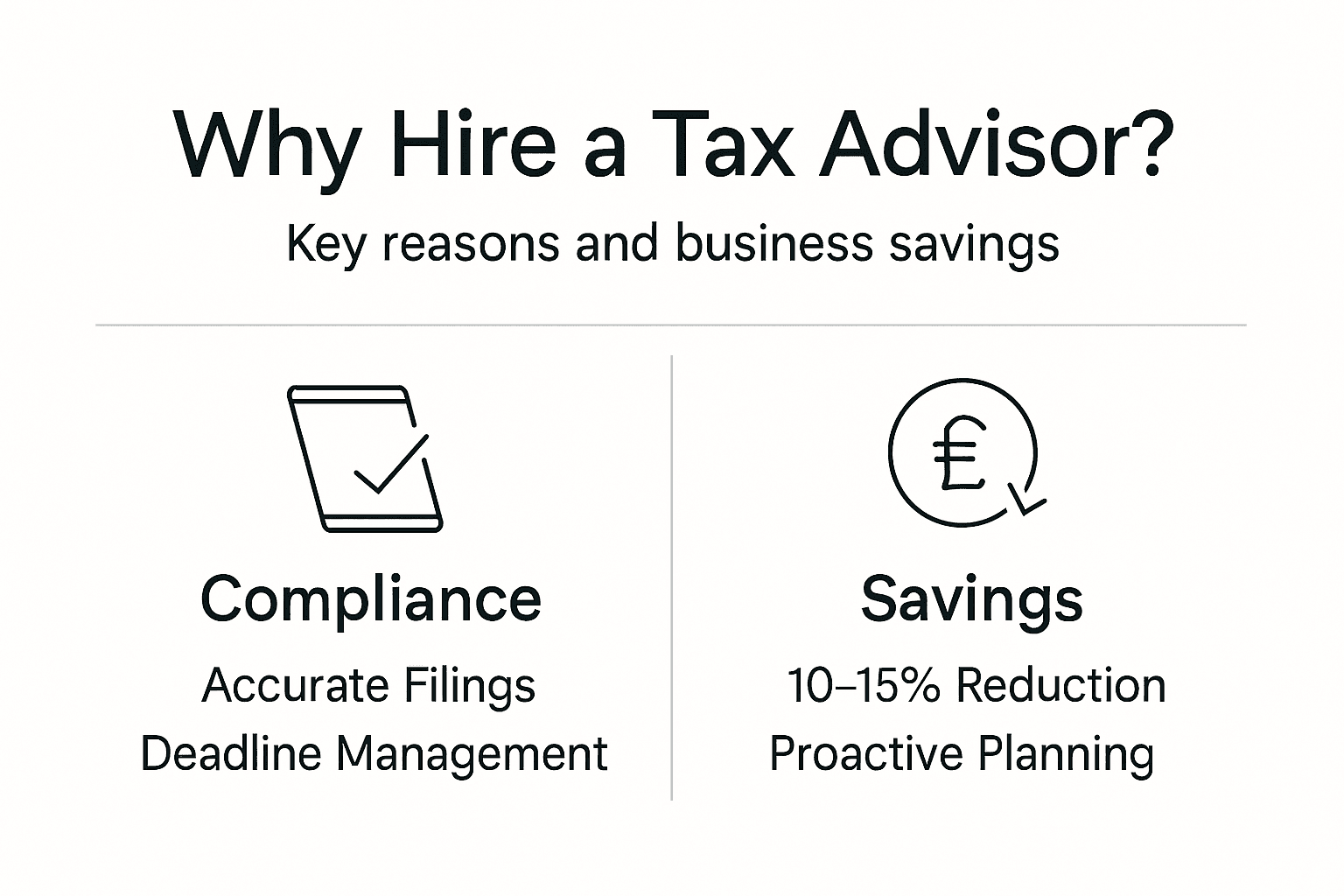
| Tax advisors reduce liabilities by 10-15% on average | Professional tax advice helps UK business owners identify overlooked reliefs and allowances, delivering substantial savings. |
| Compliance assurance reduces HMRC penalty risks | Advisors ensure accurate, timely filings, protecting you from costly fines and investigations. |
| Mandatory HMRC registration from 2026 increases reliability | New registration requirements establish baseline competence and accountability for all UK tax advisors. |
| Common misconceptions discourage effective use | Many believe advisors are too expensive or only file returns, but they provide strategic tax planning that typically exceeds fees. |
| Choosing the right advisor maximises financial benefits | Verifying qualifications and maintaining clear communication ensures you gain full value from professional tax advice. |
Understanding UK tax complexity for business owners
UK tax law presents a challenging web of obligations for business owners and sole traders. You're dealing with corporation tax, income tax, VAT, and payroll taxes, each with distinct rules and interactions. Frequent changes and updates in UK tax legislation make DIY compliance risky and complicated, particularly when multiple tax types overlap.
Understanding HMRC compliance rules requires specialised expertise that most business owners simply don't have time to develop. The complexity goes beyond basic filing requirements. You must grasp allowable deductions, capital allowances, VAT thresholds, and payroll obligations whilst staying current with annual Budget changes.
Errors in tax filings can trigger serious consequences:
- HMRC investigations that consume time and resources
- Financial penalties ranging from fixed fines to percentage-based charges
- Lost opportunities to claim legitimate reliefs and allowances
- Stress and uncertainty about your tax position
- Potential damage to your business reputation
Professional tax advisors navigate this complexity daily. They stay updated on legislative changes, understand how different taxes interact, and know which reliefs apply to your specific circumstances. This expertise mitigates risks whilst ensuring you don't overpay tax through missed opportunities.
Benefits of hiring a tax advisor: compliance and risk management
Professional tax advisors protect your business from costly errors and penalties by ensuring up-to-date compliance with HMRC regulations. Most small and mid-sized UK businesses rely on tax agents, significantly reducing risk of fines and errors. This widespread adoption reflects the genuine value advisors provide in managing compliance obligations.
Accurate, timely tax filings form the foundation of effective compliance. Advisors ensure deadlines are met, calculations are correct, and all required information is submitted properly. They reduce the risk of HMRC investigations by maintaining proper documentation and applying tax rules correctly from the start.
Penalty structures create substantial financial risks for non-compliance. HMRC penalties range from £100 fixed charges to 100% of unpaid tax, depending on severity and delay. These costs quickly exceed advisory fees, making professional help a financially sound investment.
Key compliance benefits include:
- Elimination of late filing penalties through deadline management
- Accurate calculations that prevent underpayment penalties
- Proper record keeping that satisfies HMRC requirements
- Reduced audit risk through compliant filing practices
- Peace of mind knowing your tax affairs are handled correctly
Registration with HMRC signals trusted, accountable advisors who meet professional standards. From April 2026, all UK tax advisors must register, creating a transparent system where you can verify credentials before engagement. This regulatory framework ensures advisors maintain competence and adhere to ethical standards.
Pro Tip: Review your advisor's HMRC registration status annually and confirm they carry professional indemnity insurance to protect you against errors, which provides an additional safety layer beyond standard compliance safeguards that reduce costly errors and penalties.
How tax advisors optimise tax liabilities
Beyond compliance, tax advisors deliver substantial financial benefits through strategic tax planning. Professional advisors identify tax savings opportunities worth thousands of pounds annually for small business owners by uncovering reliefs and allowances that DIY filers typically miss. These opportunities often remain hidden without expert knowledge of the tax code.

Sole traders using professional tax advisors achieve average tax savings of 10-15% compared to self-filing. This percentage translates to significant cash savings that improve business cash flow and profitability. The savings typically exceed advisory fees, creating positive return on investment.
Strategic tax planning encompasses multiple areas:
- Capital allowances on equipment and property improvements
- VAT scheme optimisation including flat rate and cash accounting
- Payroll tax efficiency through salary/dividend strategies
- Business structure planning for optimal tax treatment
- Timing strategies for income and expense recognition
Tax advisors provide broad services beyond basic return filing. They offer inheritance tax planning, business succession advice, and corporate restructuring guidance. This comprehensive approach aligns tax strategy with your overall business objectives.
| Tax planning area | Typical annual savings | Complexity level |
|---|---|---|
| Capital allowances | £1,500-£5,000 | Medium |
| VAT optimisation | £800-£3,000 | Medium |
| Business structure | £2,000-£8,000 | High |
| Expense claims | £500-£2,500 | Low |
| Pension contributions | £1,000-£4,000 | Medium |
Tailored advice aligns with your specific business circumstances. Advisors analyse your industry, revenue patterns, expense profile, and growth plans to recommend strategies that fit your situation. Generic advice rarely delivers optimal results, whilst personalised guidance maximises tax optimisation strategies specific to your needs.
Pro Tip: Schedule quarterly tax planning reviews with your advisor rather than annual catch-ups, because proactive planning throughout the year enables timely strategy adjustments that maximise savings opportunities as your business evolves.
Regulatory standards and qualifications for tax advisors
With benefits explained, the official regulatory framework guarantees advisor quality and trustworthiness. HMRC mandated registration for all UK tax advisors from 1 April 2026 ensures baseline competence and trust across the profession. This represents the most significant regulatory change in decades.
The registration system creates accountability and transparency. Digital authorisation processes link advisors to client HMRC accounts, enabling secure information exchange whilst maintaining clear records of professional relationships. You'll know exactly who has authority to act on your behalf.
Continuous professional development (CPD) is required as part of agent registration standards. Advisors must demonstrate ongoing learning to maintain competence as tax laws evolve. This requirement ensures your advisor stays current with legislative changes and best practices.
The new digital registration system launched in 2025 streamlines the process for tax agents with online client authorisation. The system reduces administrative burden whilst improving security and oversight.
Key elements of the regulatory framework:
- Mandatory HMRC registration with unique identifier for each advisor
- Digital authorisation system linking advisors to client accounts
- Minimum professional standards including qualifications and experience
- Ongoing CPD requirements to maintain registration status
- Disciplinary mechanisms for advisors who breach standards
- Public register allowing clients to verify advisor credentials
- Professional indemnity insurance requirements protecting clients
Registration reduces risk of fraud and ensures reliability. You can verify an advisor's status before engagement, checking their registration, qualifications, and any disciplinary history. This transparency empowers informed decisions about professional tax advisor standards and who you trust with your tax affairs.
Clients should always verify HMRC registration before engagement. Don't rely on claims alone. Check the public register directly to confirm current registration status and review any notes or restrictions on the advisor's authority.
Common misconceptions about tax advisors
Having established regulatory standards, several myths prevent effective use of professional advice. These misconceptions discourage business owners from accessing valuable support that would improve their financial position.
Myth one claims tax advisors are prohibitively expensive. The reality differs substantially. Advisory fees typically lead to net financial gains through tax savings exceeding costs. Most advisors charge annual fees ranging from £500 to £2,000 for sole traders, whilst delivering savings of £1,500 to £5,000 or more.
Myth two suggests you can handle taxes alone without professional help. Whilst technically possible, the complexity and constant changes in UK tax law make errors costly and likely. Self-filing works for extremely simple tax situations, but most businesses have complexities that benefit from expert guidance.
Myth three assumes advisors only file tax returns. This fundamentally misunderstands the professional role. Advisors provide strategic tax planning, VAT optimisation, inheritance tax advice, business structure guidance, and compliance support throughout the year. Return filing represents just one component of comprehensive service.
Common misconceptions about tax advisors:
- Professional advice is only for large businesses or wealthy individuals
- All tax advisors offer identical services and expertise
- Engaging an advisor signals problems with your tax affairs
- You lose control over financial decisions when using an advisor
- Online software eliminates the need for human expertise
Professional advice offers return on investment beyond simple filings. The strategic planning, compliance assurance, and peace of mind justify advisory costs even before considering direct tax savings. You gain a trusted partner who understands your business and helps you make informed financial decisions.
Understanding these myths helps you make informed decisions about hiring professional tax support. Don't let misconceptions prevent you from accessing expertise that could save thousands of pounds whilst reducing stress and compliance risks.
How to choose and work effectively with a tax advisor
After clearing misconceptions, practical steps guide you towards informed, confident choices. Selecting the right advisor and optimising your relationship ensures you gain full value from professional tax support.
Verifying HMRC registration and experience relevant to your business is critical for effective advisory relationships. Check the public register to confirm current registration status. Ask about their experience with businesses similar to yours in size, industry, and complexity.
Steps to select a qualified tax advisor:
- Verify current HMRC registration and professional qualifications
- Assess experience with your business type and industry sector
- Request references from existing clients in similar situations
- Clarify fee structures including hourly rates or fixed annual fees
- Understand scope of services beyond basic tax return filing
- Confirm professional indemnity insurance coverage levels
- Review communication preferences and response time expectations
- Discuss technology platforms for secure document sharing
Understand fee structures and scope of services offered before engagement. Some advisors charge hourly rates, whilst others offer fixed annual fees covering defined services. Clarify what's included in standard fees and which services incur additional charges. Transparent pricing prevents surprises and enables accurate cost comparison.
Provide accurate, complete financial information for best results. Your advisor can only deliver optimal guidance when working with comprehensive data. Incomplete records or missing information limit their ability to identify savings opportunities and ensure compliance. Organise your bookkeeping throughout the year rather than scrambling at filing deadlines.
Maintain clear communication and regularly review filings. Schedule periodic check-ins to discuss business changes, upcoming transactions, or new opportunities. Review completed tax returns carefully before submission, asking questions about anything unclear. Your active participation improves outcomes.
Pro Tip: Create a shared online folder with your advisor for real-time document access, which eliminates email attachments and enables both parties to review the same current information, improving efficiency and reducing communication delays when making tax planning decisions for your business.
Summary and next steps for business owners
This guide has shown how professional tax advice reduces risks, penalties, and tax costs for UK business owners and sole traders. The complexity of UK tax law, combined with frequent legislative changes, makes expert guidance valuable for compliance and optimisation.
Registered and qualified advisors provide trusted, up-to-date guidance that protects your business. The mandatory HMRC registration from 2026 creates a transparent system where you can verify credentials and ensure advisors meet professional standards. This regulatory framework increases reliability across the profession.
Hiring an advisor leads to average tax savings of 10-15% for sole traders. These savings typically exceed advisory fees, creating positive return on investment whilst reducing stress and compliance risks. The financial benefits extend beyond direct tax savings to include time saved and peace of mind.
Key next steps for business owners:
- Verify HMRC registration as your first step when evaluating advisors
- Gather business financial records including income, expenses, and previous filings
- Schedule consultations with two or three qualified advisors to compare services
- Ask specific questions about experience with businesses like yours
- Request transparent fee quotes covering expected annual services
- Begin engagement well before filing deadlines to maximise planning opportunities
Take action now to improve your tax outcomes. Professional tax advice represents an investment in your business that delivers measurable returns through reduced liabilities, improved compliance, and strategic guidance aligned with your objectives.
How LS25 Accountants can help you with tax advice
Following practical guidance on selecting advisors, LS25 Accountants offers trusted partnership for professional tax services. We provide expert tax advisory services tailored specifically to UK business owners and sole traders across the LS25 postcode area and beyond.
Our services include comprehensive tax planning, compliance checks, and risk management designed to maximise your tax savings whilst ensuring HMRC compliance. We stay current with legislative changes and apply proven corporate tax planning strategies that reduce liabilities legally and effectively.
Working with LS25 Accountants helps you achieve the 10-15% average tax savings whilst avoiding costly HMRC penalties. Our qualified team brings industry-specific expertise to your unique circumstances, delivering personalised guidance that generic advice cannot match. Explore detailed guides and strategies on our website to learn more about optimising your tax position.
FAQ
What qualifications must a UK tax advisor have in 2026?
Tax advisors must be registered with HMRC and meet ongoing professional standards including continuous professional development from April 2026. Registration confirms baseline competence and authorises advisors to act on clients' behalf digitally through secure HMRC systems.
How much can I save by hiring a professional tax advisor?
UK sole traders save an average of 10-15% on their tax bills by using qualified tax advisors through optimised deductions and compliance. These savings typically exceed advisory costs, making professional help financially beneficial. Larger businesses often achieve even greater percentage savings through strategic tax planning.
What should I prepare before meeting a tax advisor?
Gather business financial records including income statements, expenses, VAT returns, and previous tax filings. Have details of your business structure, significant transactions, and any HMRC correspondence ready for review. This preparation enables your advisor to provide accurate, tailored tax guidance from your first meeting.
Can a tax advisor help with VAT and payroll taxes?
Yes, tax advisors offer expertise in VAT optimisation and payroll tax compliance alongside income and corporation tax services. This comprehensive approach enables integrated tax risk management and planning across all tax types affecting your business. Many advisors specialise in specific industries or tax areas to provide deeper expertise.